Skip to content
LOS ANGELESFIELD LOG

INDEX · 03 NOTES

Field notes

Three notes from the yard. Written by the people who did the work, which is why they are short.

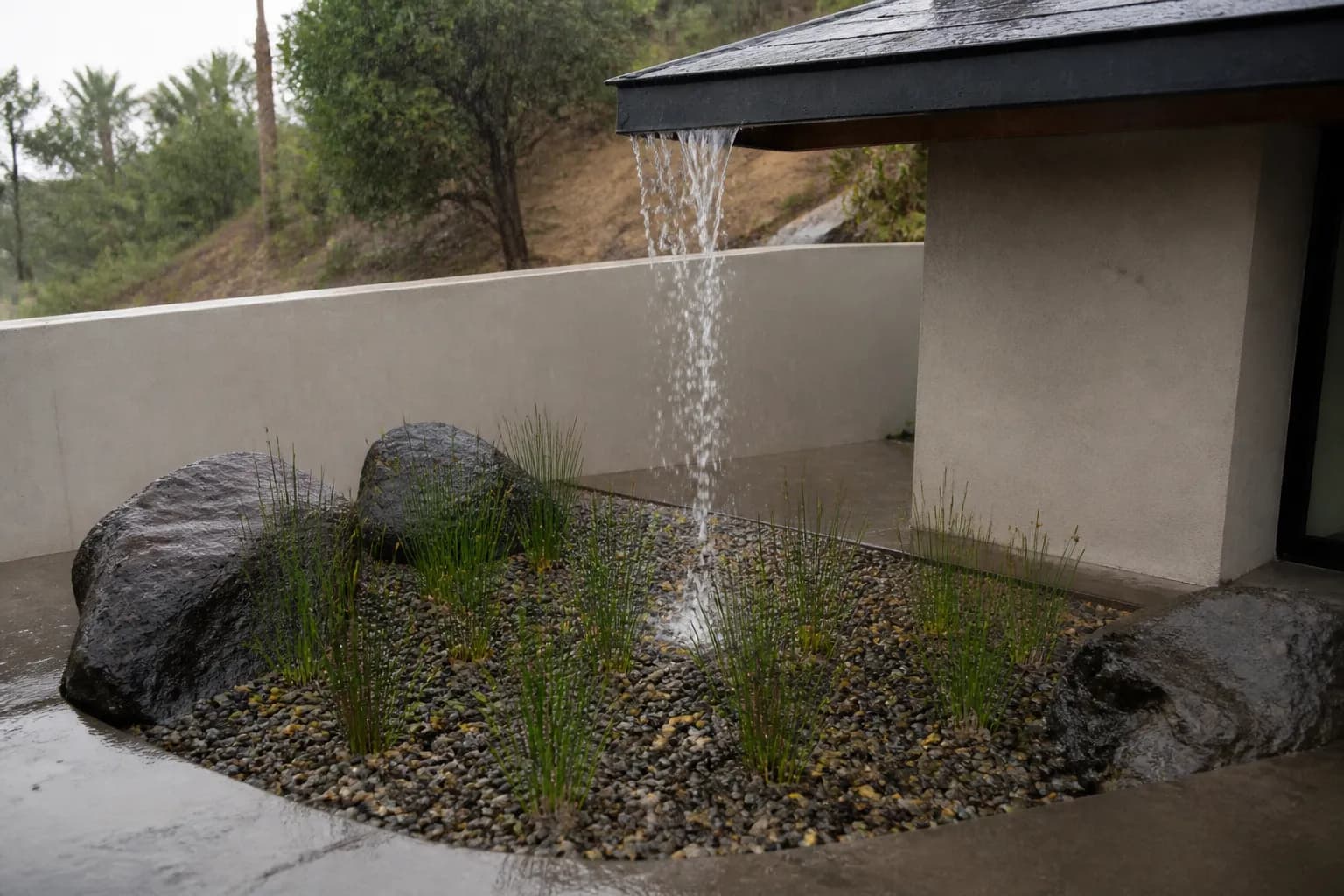
Rain running off a roof into a gravel basin planted with rushes, the wet stones darkened.

Where the water already goes

The first drawing we make of a site is usually wrong, because it is made on a dry day. Water does not care about property lines or about the shape a garden is supposed to have. It comes off the roof, crosses the driveway, finds the low corner, and leaves. If you can be on site during a real storm you will learn more in twenty minutes than in a week of measuring.

So we build to the line the water has already chosen. A swale is a shallow dish, not a trench; it slows water down and gives it somewhere to sit long enough to soak in. Depth matters less than length and less than what is planted along it. Rushes and sedges at the invert, then sages and buckwheat up the sides where the soil dries out fastest.

The mistake we see most often is a basin built too deep and too small, so it holds a puddle for three days and kills whatever is in it. If you are guessing, go wide and shallow. You can always cut it deeper after the first winter, and the first winter is the only honest test there is.
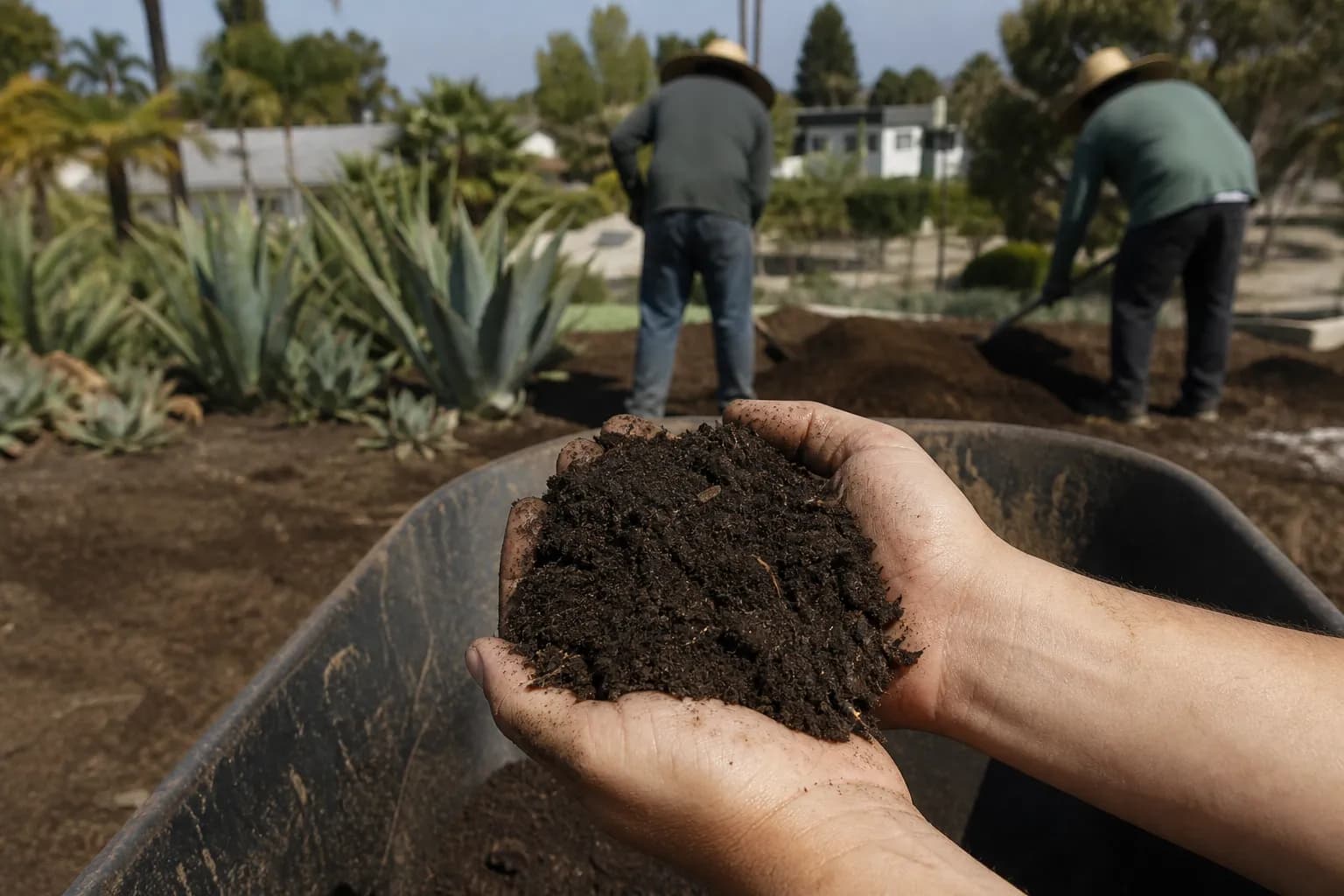
Two cupped hands holding dark crumbly compost over a wheelbarrow.

Soil before anything else

Most of the yards we work in have been driven on, parked on, or scraped flat by a machine at some point. The top few inches are compacted to the point where a shovel bounces. Nothing you plant into that will thrive, and no irrigation schedule will rescue it, because the water cannot get past the crust to reach the roots.

The fix is slow and unglamorous. We break the top eight to twelve inches by hand or with a broadfork, leave the profile in place rather than turning it over, and add compost on the surface where the soil life can pull it down. Rototilling looks faster and undoes itself within two seasons, because it destroys the structure that lets a soil hold air.

Then we leave it alone under mulch until planting day. On a nine-week build that is a week spent on something the client will never see, and it is the week that decides whether the garden is still alive in year three. We say so at the estimate stage so nobody wonders what the crew was doing.

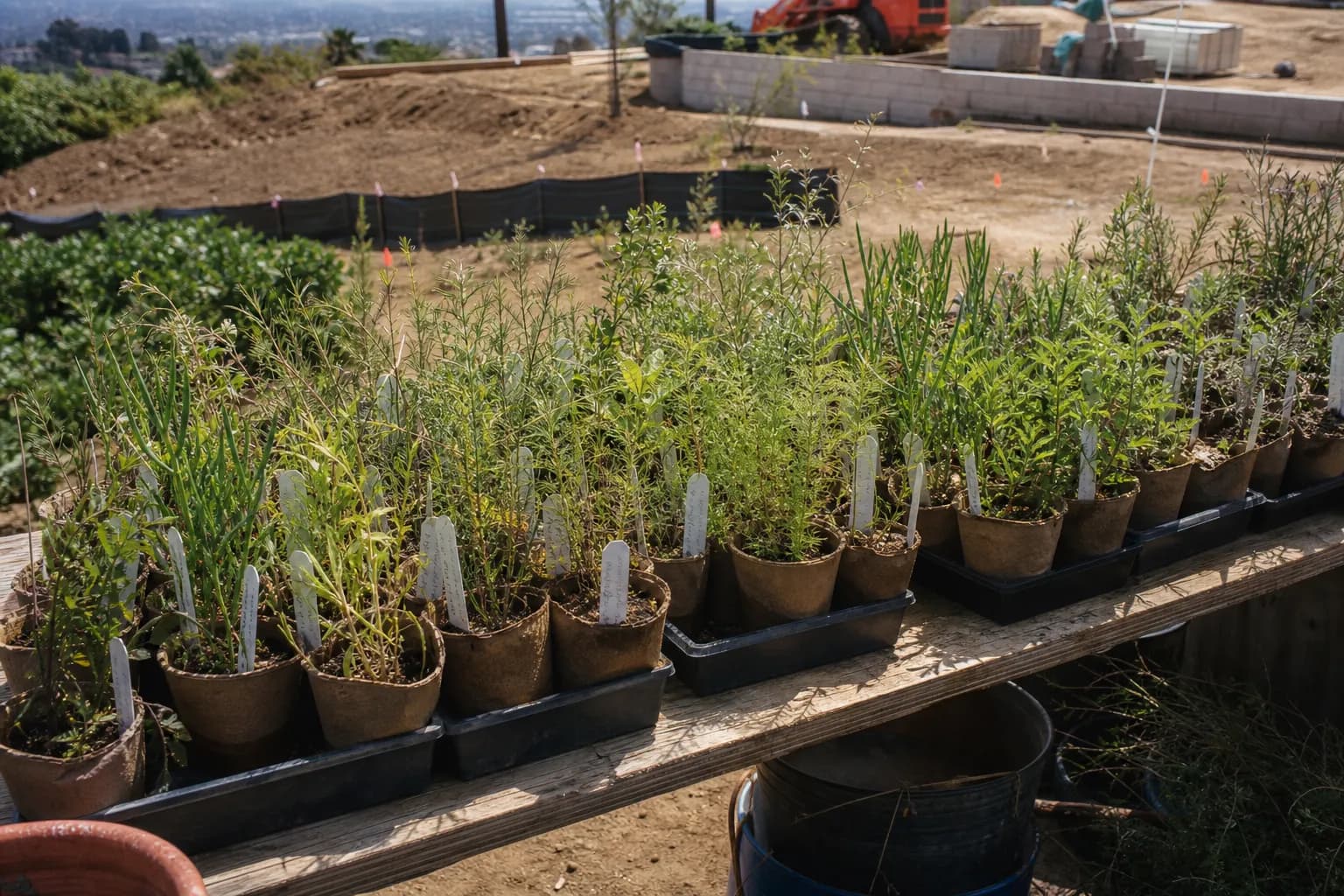
A flat of young native seedlings in paper pots on a potting bench with handwritten tags.

Planting in drifts, not collections

A nursery visit is a dangerous place to design a garden. Everything is at its best, everything is one gallon, and it is very easy to come home with forty species and one of each. That garden reads as a collection for its whole life. It never settles into a shape, and it is miserable to maintain because every plant wants something different.

Drifts fix this. Take the list down to eight or ten species that share the same water and light, then plant them in runs of five, seven, eleven. The eye reads a run as one thing, so the garden has structure from the first day rather than waiting three years to get it. The repetition also makes maintenance teachable, which matters more than it sounds.

We plant small. One gallon establishes faster than five gallon in this climate and catches up inside two seasons, and it costs less to replace the ones that do not take. Some will not take. We plan for that, come back at the end of the first summer, and fill the gaps from the same eight species rather than adding a ninth.

SWALE — landscape design and build, Los Angeles

000 Example AvenueLos Angeles, CA 90000(000) 000-0000studio@swale.example

Back to top ↑

© 2026 SWALE

SWALE is a fictional landscape studio built as a portfolio demonstration. Every project, place name, figure and note on this site is invented, and the address, telephone number and email address are placeholders.

Licensed and insured — demonstration only. No licence number is shown because this studio does not exist.